Creator Tech
Mini Mic Pro Review: The Best Budget Wireless Mic for Creators ($25)
I tested the Mini Mic Pro — a $25 wireless lavalier mic with noise cancelling, fuzzy windscreens, and USB-C. Here's why it's the best budget mic setup for iPhone and Android creators.
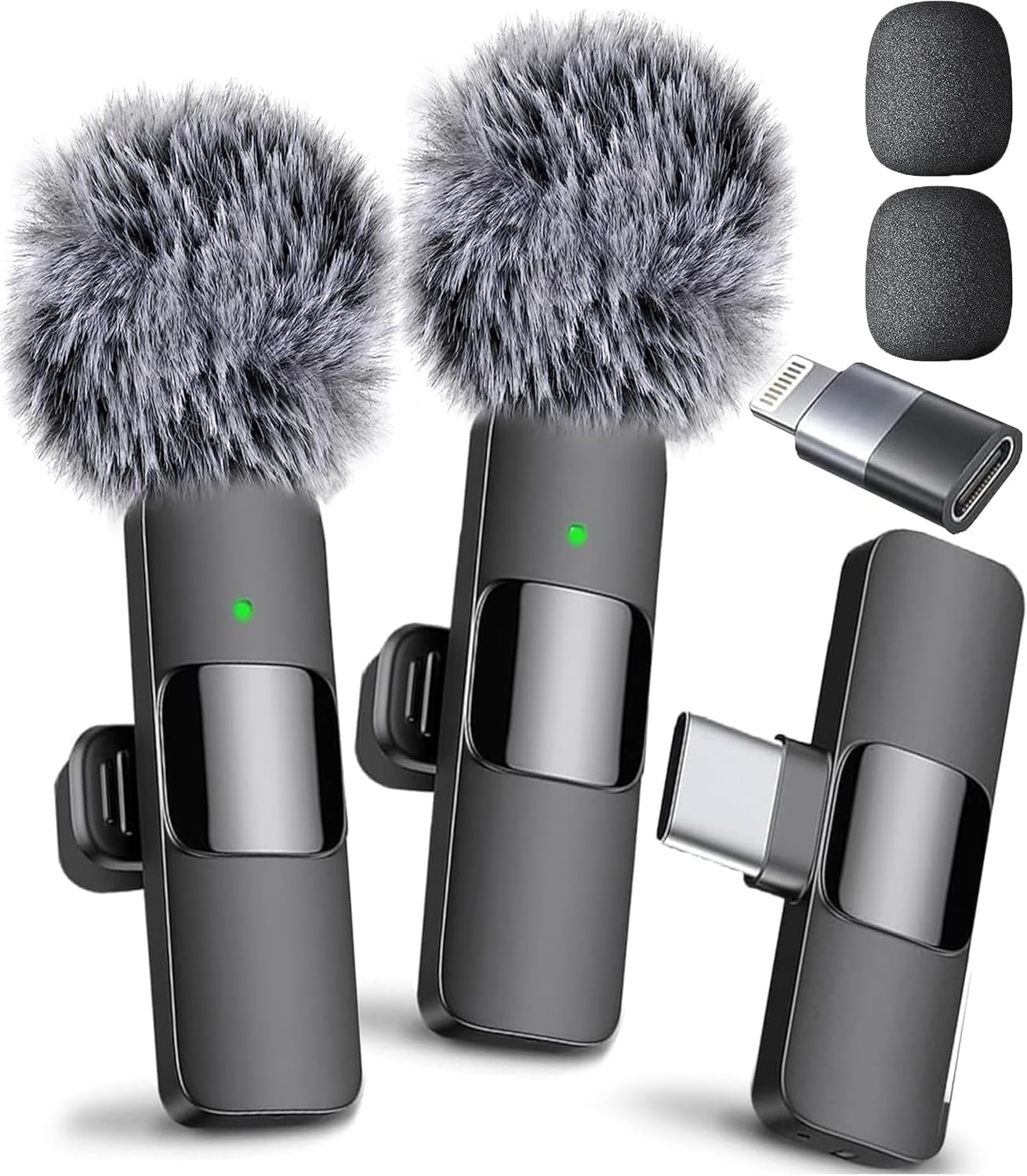
Short version: The Mini Mic Pro at $24.99 is the best budget mic setup I’ve found — two wireless lavaliers with dead-cat windscreens, USB-C and Lightning support, noise cancelling, and surprisingly clear audio. For less than a single dinner out, you get a kit that sounds good enough for YouTube, TikTok, interviews, and even voiceovers.
I’ve bought more microphones than I want to admit. I have the $300 setup that sits on my desk. I have the lav that needs a recorder clipped to my belt. And I have a drawer of cheap mics that sounded good in the product photos and terrible on playback.
The Mini Mic Pro is not in that drawer.
What you get for $25
The kit is simple — two transmitter mics with clips and grey fuzzy windscreens (dead cats), one USB-C receiver that plugs straight into your phone, a Lightning-to-USB-C adapter for older iPhones, and two foam windscreens for indoor use. That’s it. No base station. No cables to juggle. No Bluetooth pairing dance.
You clip the mic on, plug the receiver into your phone, and it works. The green LEDs tell you you’re live. The noise cancelling kicks in automatically.
For $24.99 (17% off the $29.99 list), that’s an absurd amount of value.
How it actually sounds
I tested it in three real scenarios:
Indoor voiceover. Sitting at my desk recording a script — it sounds clean and full. The built-in noise cancelling doesn’t add that hollow digital echo a lot of cheap mics get. It just sounds like me. Not as rich as my desk condenser, but close enough that I’d use it for a video without hesitation.
Outdoor with wind. The grey dead cats matter here. I walked around with it on a breezy day — the kind of wind that kills phone mics instantly. The Mini Mic Pro handled it. Some rustle if the wind hits the windscreen directly, but nothing editing can’t fix. For a mic this small, it’s impressive.
Interview. I handed the second transmitter to someone else and recorded both sides into one phone. That’s the killer use case — two people, one phone, no external recorder, clean audio from both sides. The range is good through a room and around a corner.
Where it cuts corners
At $25, nothing is perfect, and being honest about the tradeoffs is the whole point of this site:
No onboard recording. If the receiver disconnects, you lose audio. For talking-head YouTube videos where you’re standing in range, that’s fine. For run-and-gun where you might wander out of range, it’s worth knowing.
The build is lightweight. The transmitters feel like durable plastic — they’re not rugged. They’ll survive drops onto carpet but probably not a concrete floor. The clips are solid but I wouldn’t trust them to a thin shirt pocket on a windy day.
The Lightning adapter is a dongle. If you’re on an iPhone with Lightning (not USB-C), you’ll need that tiny adapter dongle, which is easy to misplace. The USB-C version plugs straight in with no adapter needed — that’s the one shown in the Amazon listing.
Battery life is about 6-8 hours. Enough for a full day of shooting but you’ll need to charge overnight if you’re doing back-to-back sessions.
Who this is for
If you’re starting a YouTube channel, filming TikToks, recording interviews, or just want to sound better on calls — this is the mic to buy. Not the $150 Rode, not the $200 DJI. Start here. See if your content actually needs better audio (it probably doesn’t yet). Upgrade when you know why you’re upgrading.
If you’re already producing professionally and need a backup or travel mic, it also fits that slot perfectly. I keep mine in my bag for when I need good audio without carrying the big rig.
The bottom line
The Mini Mic Pro at $24.99 is the best budget mic setup I’ve tested. It sounds good, works with iPhone and Android, handles wind surprisingly well, and the two-mic setup means you can do interviews from day one. For the price, there’s nothing else I’d recommend over it.
If you want to start creating content and don’t know what mic to buy — this is the answer. Spend the saved money on a tripod or a ring light instead.
This was tested on an iPhone 15 Pro (USB-C) and a 2024 Android phone. Your mileage may vary with different phones or cases — the receiver needs to seat fully into the port.
More Creator Tech picks
iPhone 18 Pro vs iPhone 17 Pro: The Sarcastic Review
The iPhone 18 Pro has a 2nm A20 Pro chip, a variable aperture camera, 29-hour battery, and 15-minute fast charging. Michael ran the announcement through his proof-based filter — is it worth upgrading from the 17 Pro? Spoiler: it's a phone.
Claude Cowork, Tested: Can AI Agents Actually Do Real Work Together?
Michael watched AI agents collaborate in real time on Claude Cowork. Does it hold up to real work, or is it another demo wearing a subscription? The honest test.
I Complained to Apple About Siri. They Sent Me a Warning.
Michael reported iOS 27 beta Siri failing him, and Apple's automated response flagged his feedback for profanity. He didn't use any. The story of complaining to a machine that can't listen.
Never miss a pick
Join the list for new gear drops, honest test results, and what actually broke.
Subscribe on YouTube