EV Accessories
Tesla Roadster: Better Than the Concept After 9 Years
The production Tesla Roadster is finally real — and it's sharper, meaner, and more ridiculous than the 2017 concept. Oct 1 unveil, sub-2 second 0-60, SpaceX thrusters still on the spec sheet. Here's what we know.
Short version: Nine years after the concept stunned the world, Tesla showed the production Roadster — and it’s somehow better. Sharper lines, full LED lightbar, Cybertruck’s evil twin styling, and those SpaceX cold-gas thrusters are still on the option sheet. Full unveil is October 1. This thing at 200 grand with sub-2 second 0-60 changes the conversation.
Tesla finally showed the production Roadster, and I have thoughts.
Nine years is a long time to wait for a car that was supposed to ship in 2020. I remember seeing the 2017 concept reveal and thinking “okay, that’s the best-looking car Tesla has ever designed” — then watching the timeline slip year after year while the Model 3 ramp, Cybertruck, and Semi all took priority. Every earnings call, someone asked about the Roadster. Every answer was “we’re still working on it.” I stopped checking. I figured it would eventually launch as a different car or get quietly shelved.
I was wrong. The production version is here — and it’s better.
The concept trap
Usually, concepts are the peak. The production version is the compromise. Let me give you the examples that live in my head:
The Chevy Volt concept from 2007 was a sweeping, dramatic coupe with a fighter-jet-inspired cockpit, rear-hinged back doors, and a shape that genuinely looked like the future. The production Volt that actually shipped in 2010 was a sensible five-door hatchback. Same engineering underneath — a great car, but the concept was theater and the production car was reality. Nobody looked at the production Volt and said “that’s even cooler than the concept.”
The BMW i8 concept was a low, wide, dramatic sports car with every surface flowing into the next. The production i8 kept the dihedral doors and the silhouette, but the details got softer, cheaper, and more production-friendly. It was still striking — you notice an i8 on the road — but the edge was gone.
The Toyota FT-1 concept → Supra is the same story. The concept was raw and aggressive; the production Supra shared a platform with the Z4 and the design settled into “handsome, not dangerous.”
The Roadster is the first car I can think of where the production version is genuinely meaner than the concept. That doesn’t happen.
What changed
The 2017 concept had smooth, almost organic curves — beautiful, but a little soft for a car that claims 0-60 in 1.9 seconds. The production version they just showed has edges. Real geometric intent. A full-width LED lightbar across the back that wraps around the corners. A front end that looks like the Cybertruck’s smaller, meaner relative — sharp, angular, and purposeful. Wider stance with more aggressive air intakes than the concept had. The mirrors are smaller, the bodywork is tighter, the whole thing looks like it’s ready to do something, not just sit in a display.
It’s meaner. That’s the word. The concept was aspirational — “wouldn’t it be cool if…” The production version looks like it’s already mad at whatever’s in front of it and it’s just waiting for a launch to prove the point.
The wheel-to-body ratio is one of the first things I noticed. The concept had that classic supercar wide-track stance, but the production version pushes the wheels even further to the corners. The overhangs are minimal. From the front three-quarter view, it reads as a car that’s all wheelbase and no waste — which is exactly how a 200-mph EV should look. The side profile is cleaner than the concept, too: where the concept had a sculpted rocker panel with some drama, the production car smooths that out into a single clean line from front to rear. It’s less busy, more purposeful.
The SpaceX thrusters survived
The cold-gas thrusters — the party trick that everyone assumed would get cut for production — are still on the spec sheet. I genuinely did not expect those to survive.
Compressed air thrusters for a production car is the kind of thing that legal, safety, and homologation teams kill in the first meeting. Regulators need to sign off on a car that can fire pressurized gas at the road surface to improve braking, cornering, and acceleration. That’s a conversation I would hate to be in. “Yes, our car can shoot air at the ground to go faster” is a sentence that gets liability reviews the size of a phone book.
That they’re still listed as an option tells you how seriously Tesla is taking the “no-compromise” brief on this car. Whether they actually work in production — whether a buyer gets real, usable thruster performance or a track-mode gimmick that fires once per session — is the October 1 question. But the fact that they’re even trying puts the Roadster in a different category than anything else at the price point.
The powertrain context
I drive a 2018 Model S 100D (Sylvie) and a 2019 Model 3 SR+ (Lucky). I know Tesla’s powertrain evolution well. The original 100D was a 0-60 in 2.5 seconds car — fast enough to embarrass almost anything on the road. The Plaid that followed took the same architecture and turned the knobs past eleven: three motors, carbon-sleeved rotors, 1,020 hp, sub-2-second 0-60.
The Roadster is what happens when you take the Plaid powertrain knowledge and start from a clean sheet with “performance first” as the only constraint. No second-row seats to package. No trunk space minimum. No roof rack. No compromises for family usability. The tri-motor architecture is proven at this point — the Plaid has been on the road for years and it’s reliable, consistent, and brutally fast. The Roadster wraps that proven powertrain in a body designed for speed above everything else.
The weight difference alone should make it dramatically faster than the Plaid. The Plaid Model S weighs about 4,800 lbs with a driver. A two-seat sports car should be at least 1,000 lbs lighter — probably more. Same power, 20% less weight, better aero, lower drag. The math writes checks the Plaid can’t cash.
The original claim was 1.9 seconds 0-60 in 2017 — on battery technology that’s now nine years old. The 4680 cells, the structural pack, and the thermal improvements since then mean either the number improves or the price comes down. A 200-grand Roadster that does 0-60 in 1.5 seconds is a different conversation than one that does 1.9. The first is a hypercar contender; the second is a very fast halo car that shares architecture with the Model S. October 1 should tell us which one we’re getting.
What I’m watching for on October 1
The real 0-60 number
Sub-2 is assumed. Is it sub-1.8? Sub-1.5? If Tesla says “1.5 seconds” and backs it with a verified run, everything under $1 million that isn’t electric just became irrelevant. If they say “under 2 seconds” without a specific number, it’s a marketing win but the engineering statement is weaker.
The interior
$200,000 is a lot of money for a car with a minimalist interior. The Plaid interior works because the car starts at $90k. Roadster buyers are cross-shopping Porsche, McLaren, and Rimac — cars where the interior is a significant part of the purchase justification. If the Roadster interior is Model 3-plus with nicer materials, that’s a miss. If it’s genuinely bespoke — different dash, different seats, different everything from any other Tesla — that justifies the price.
Thrusters in action
Show them working, or the gimmick dies. A press release saying “SpaceX thrusters optional” means nothing without a demonstration. A video of the car braking shorter or cornering faster with thrusters engaged would be the most memorable car demo since the Model X SUV towing a plane. If we don’t see it on October 1, the thrusters are a footnote, not a feature.
Range
620 miles (original claim) was 2017 optimism. If the real number is 400-500, that’s still class-leading. If it’s under 300, the Roadster name doesn’t fit. A roadster should road-trip.
Why this matters beyond the car
The Roadster is Tesla proving they can build a genuine supercar, not just a fast sedan. It’s a design and engineering statement that says “we can do everything a combustion supercar does, better, and do things no combustion car has ever done.”
For someone like me — two Teslas in the driveway, daily-driven for years — it’s validation that the platform I already trust has room at the top I didn’t expect. Sylvie is a practical seven-year-old hatchback with 100 kWh and a frunk full of charging cables. Lucky is the efficient daily commuter. The Roadster is the answer to the question “what happens if they don’t compromise on anything?”
The bigger question is what this does to the rest of the industry. If Tesla delivers a sub-1.8-second 200-grand supercar with interior quality that matches the price, Porsche and Rimac have a problem. If they miss the interior or the thrusters are vaporware, the conversation is different but the Roadster is still the most anticipated EV since, well, the last Tesla.
Either way, October 1 is going to be interesting.
Bottom line: The production Roadster is better than the concept — and that almost never happens. The style is sharper, the specs are still insane, and those SpaceX thrusters survived legal review. Full unveil October 1. I’ll be watching.
As an Amazon Associate I earn from qualifying purchases. Full methodology on the How We Test page.
More EV Accessories picks

Best Dash Cam for Tesla 2026 — With Real Night Footage
The built-in Sentry cams aren't enough. Michael tested dash cams in his 2018 Model S 100D — wiring, night video, app reliability, and the one that hides behind the mirror. Includes a spec comparison table.
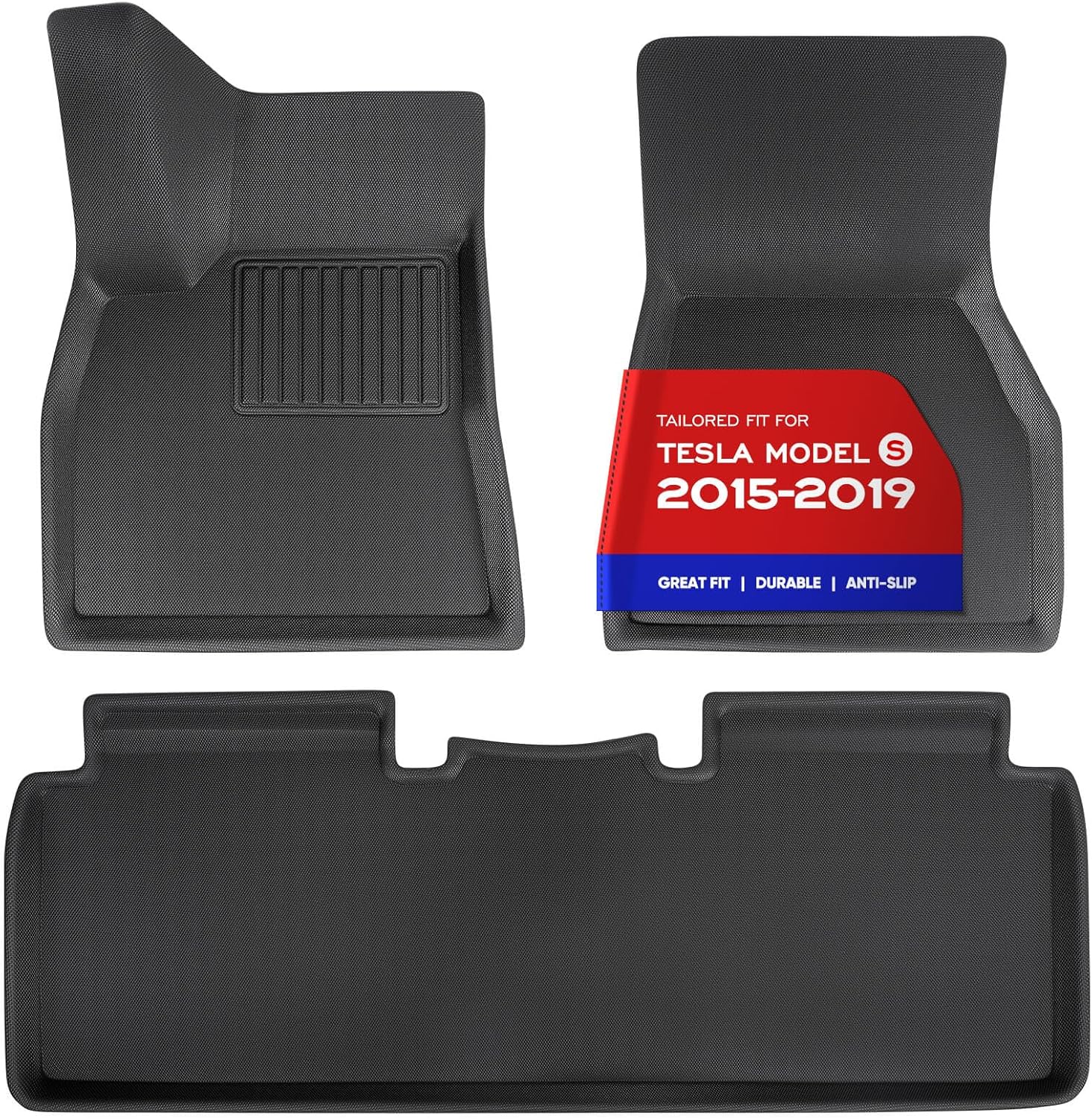
Tesla Model S Accessories I Actually Bought for Sylvie
A year of real miles in a 2018 Model S 100D taught me what's worth your money and what's a scam. Floor mats, screen protector, dash cam, and more — tested, not guessed.
Never miss a pick
Join the list for new gear drops, honest test results, and what actually broke.
Subscribe on YouTube